EAN-12 vs EAN-13 Barcode Comparison Guide for Retail and Packaging
Compare EAN-12 and EAN-13 barcode systems including structure, usage, advantages, disadvantages, and retail compatibility.
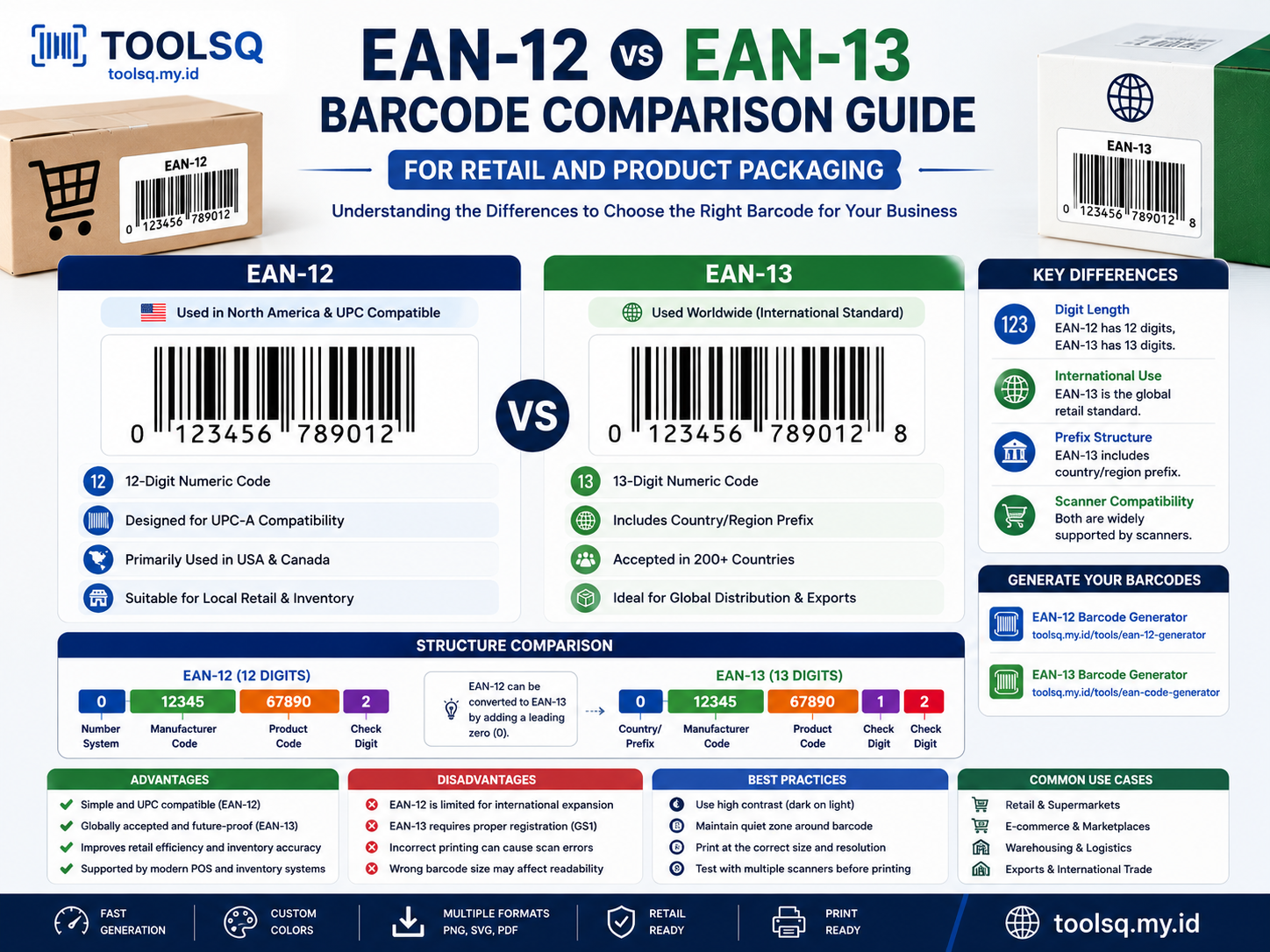
Learn the differences between EAN-12 and EAN-13 barcode systems including structure, retail compatibility, advantages, disadvantages, and best usage scenarios.

Barcode technology has become one of the most important components in modern retail, logistics, inventory management, product distribution, and e-commerce systems. Businesses around the world rely on barcode systems to automate checkout processes, improve inventory accuracy, and streamline product identification.
Among the many barcode formats available today, EAN barcode systems are widely used for retail products and global distribution. While EAN-13 is the most commonly recognized international barcode standard, many people also encounter references to EAN-12, especially when discussing compatibility with UPC barcode systems.
Understanding the differences between EAN-12 and EAN-13 is important for businesses, retailers, packaging designers, and inventory managers who want to ensure barcode compatibility and professional product labeling.
Businesses looking for professional barcode generation tools can use UPC-A Barcode Generator and EAN-13 Barcode Generator to create retail-ready barcodes with customization options, scalable downloads, and packaging-friendly formats.
In this complete guide, you will learn everything about EAN-12 and EAN-13 barcodes, including their structure, regional usage, technical differences, advantages, disadvantages, compatibility, customization features, and best practices for retail and packaging.
What is EAN-12?
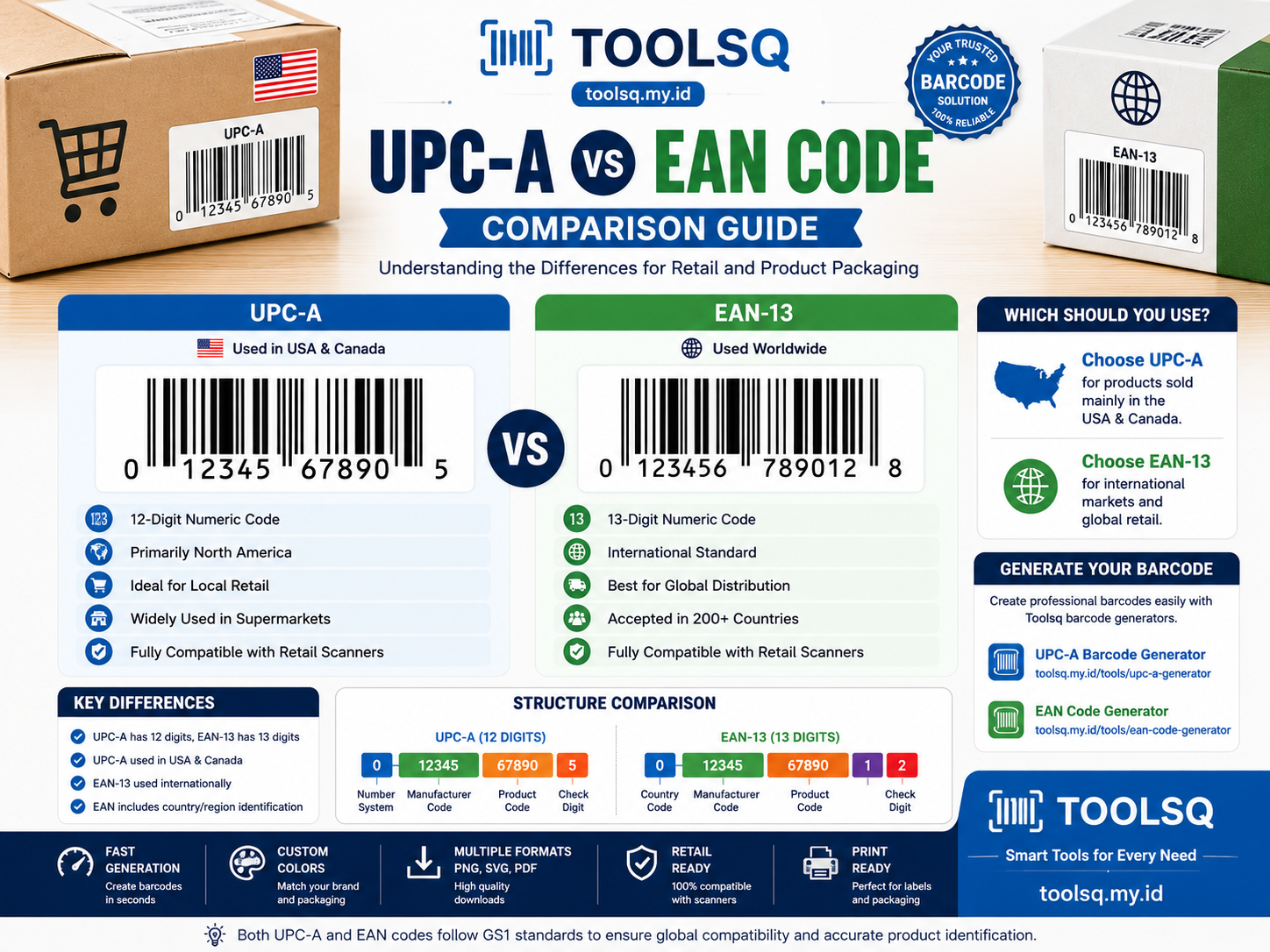
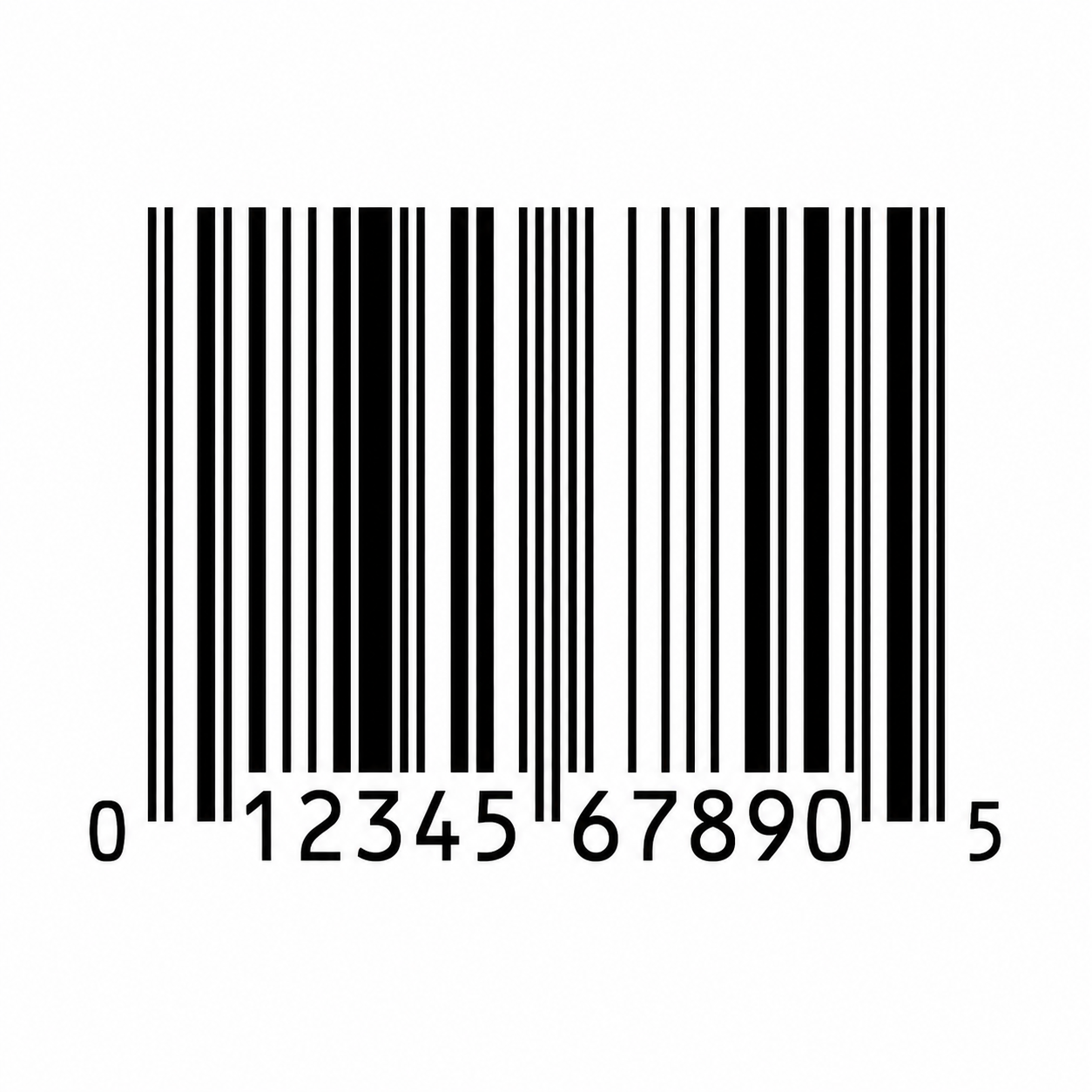
EAN-12 is often used informally to describe a 12-digit barcode structure that is compatible with UPC-A systems. Technically, EAN systems are primarily standardized under EAN-13, but UPC-A codes can be interpreted as EAN-compatible codes by adding a leading zero.
In many retail systems:
- UPC-A contains 12 digits
- EAN-13 contains 13 digits
- UPC-A can be converted into EAN format by adding a leading zero
Because of this compatibility, some people refer to UPC-compatible barcode structures as EAN-12 in retail and inventory discussions.
Businesses commonly use retail UPC-A barcode generator tools for inventory management, local retail products, and supermarket packaging.
What is EAN-13?
EAN-13 stands for European Article Number 13-digit barcode format. It is the official international retail barcode standard used globally for product identification, supermarket checkout systems, inventory tracking, and international commerce.
EAN-13 barcodes contain 13 numeric digits and are managed under global GS1 standards.
- 13-digit barcode structure
- International retail compatibility
- Global product identification
- Used in supermarkets worldwide
- Supports international distribution
International businesses often rely on EAN barcode generator for global retail products to simplify packaging and product distribution workflows.
Main Differences Between EAN-12 and EAN-13
1. Number of Digits
The most obvious difference between EAN-12 and EAN-13 is the total number of digits.
- EAN-12 uses 12 digits
- EAN-13 uses 13 digits
EAN-13 includes an additional leading digit that helps identify country or regional registration information.
2. International Compatibility
EAN-13 is designed as the official international retail barcode standard.
- Global supermarket support
- International supply chain compatibility
- Worldwide scanner acceptance
EAN-12 structures are typically associated with UPC compatibility and are more commonly linked to North American retail systems.
3. Regional Usage
EAN-12 style barcode systems are mostly related to US and Canadian retail environments, while EAN-13 is used globally.
- EAN-12 = North America compatibility
- EAN-13 = Global retail standard
4. Product Registration Information
EAN-13 includes an additional leading prefix that provides extra registration or regional identification information.
- Country identifiers
- Regional registration support
- International classification
This makes EAN-13 more flexible for global product management.
5. Retail Scanner Compatibility
Modern barcode scanners can generally read both formats without problems.
- Retail POS compatibility
- Inventory management support
- Warehouse scanning systems
However, EAN-13 is considered the preferred international standard.
EAN-12 vs EAN-13 Comparison Table
| Feature | EAN-12 | EAN-13 |
|---|---|---|
| Total Digits | 12 | 13 |
| Main Usage | UPC-Compatible Systems | International Retail |
| Global Compatibility | Moderate | Excellent |
| Regional Identifier | Limited | Yes |
| Retail Scanner Support | High | High |
| International Distribution | Limited | Excellent |
| Common Retail Usage | North America | Worldwide |
Advantages of EAN-12
EAN-12 style barcode systems still offer several advantages, especially for businesses focused on North American retail environments.
- Simple barcode structure
- Compatible with UPC systems
- Widely supported in North America
- Fast retail scanning
- Easy inventory management
Businesses operating mainly in local retail markets may find EAN-12 compatible systems sufficient for daily operations.
Users can quickly create product-ready labels using customizable UPC-A barcode creator tools that support high-quality PNG, SVG, and printable formats.
Advantages of EAN-13
EAN-13 offers stronger international capabilities and is considered the global standard for retail product identification.
- Worldwide retail acceptance
- Supports global supply chains
- International product distribution
- Country identification support
- Ideal for exports and e-commerce
EAN-13 is highly recommended for businesses planning international expansion.
Companies selling products globally often use professional EAN-13 barcode generator tools for worldwide retail compatibility and marketplace integration.
Disadvantages of EAN-12
- Limited international standardization
- Less ideal for global retail expansion
- Limited regional identification support
- Primarily linked to UPC compatibility
Businesses selling products internationally may eventually need EAN-13 compatibility.
Disadvantages of EAN-13
- Slightly more complex numbering system
- Additional registration management
- May require GS1 registration processes
Despite these minor disadvantages, EAN-13 remains the preferred international retail standard.
Advantages and Disadvantages of Using Online Barcode Generators
Advantages from User Perspective
- Fast barcode generation process
- No design software required
- Supports retail-ready formats
- Easy customization options
- High-quality export downloads
- Suitable for packaging and labels
Tools like UPC-A barcode generator for inventory systems and EAN barcode generator for retail packaging simplify barcode creation for businesses, designers, and product manufacturers.
Disadvantages from User Perspective
- Limited visual customization
- Incorrect settings may affect readability
- Requires accurate printing dimensions
- Improper scaling can break scanner compatibility
Users should always test barcode scanners before mass production or retail deployment.
Barcode Structure Breakdown
EAN-12 Structure
- Manufacturer code
- Product code
- Check digit
EAN-12 structures are generally compatible with UPC retail systems and local product tracking.
EAN-13 Structure
- Country or region prefix
- Manufacturer code
- Product code
- Check digit
The additional prefix improves international product classification and global retail compatibility.
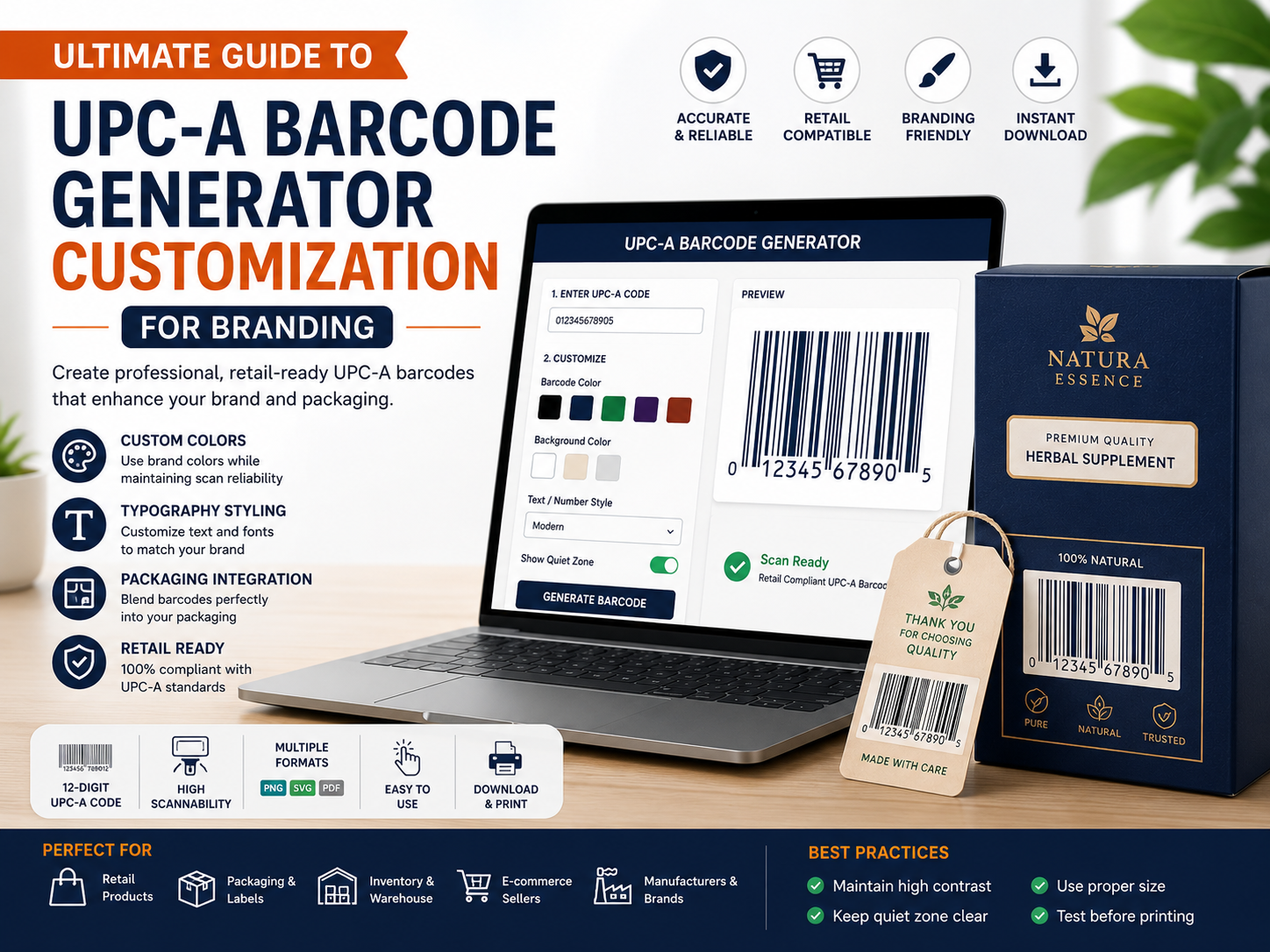
Customization Options
EAN barcodes can be customized to a limited extent while maintaining retail scanner compatibility.
- Dark color customization
- Typography adjustments
- Professional packaging integration
- Custom label layouts
Businesses using advanced EAN barcode maker tools can create visually professional barcode labels suitable for modern product packaging.
However, excessive design modifications should be avoided because barcode scanners require accurate spacing and contrast.
Best Practices for EAN Barcode Design
Maintain High Contrast
Use dark barcode lines on light backgrounds to ensure reliable scanning performance.
Keep Proper Dimensions
Incorrect barcode proportions may cause scanner failures at retail checkout systems.
Maintain Quiet Zones
Empty spaces around the barcode are important for accurate barcode detection.
Use High-Resolution Printing
Blurry or low-quality barcode printing can negatively affect scan accuracy.
Test Before Mass Production
Always test barcode scanners before large-scale packaging production.
Popular Industries Using EAN Barcodes
Retail Stores
- Supermarkets
- Convenience stores
- Electronics stores
- Department stores
E-Commerce Businesses
- Marketplace products
- Inventory systems
- Fulfillment centers
Warehousing and Logistics
- Inventory tracking
- Shipping systems
- Warehouse automation
Manufacturing
- Product labeling
- Supply chain tracking
- Retail packaging
Best File Formats for EAN Barcodes
PNG
Best for websites, previews, and basic digital usage.
SVG
Ideal for scalable printing without losing barcode quality.
Suitable for professional packaging and mass printing projects.
Common Barcode Mistakes
- Using low contrast colors
- Printing barcodes too small
- Distorting barcode proportions
- Ignoring quiet zones
- Using blurry barcode images
- Not testing scanners before production
Security and Reliability Tips
- Use trusted barcode generation systems
- Verify barcode numbers carefully
- Use high-resolution exports
- Maintain proper barcode spacing
- Test with multiple retail scanners
When Should You Use EAN-12?
EAN-12 compatible barcode systems are suitable for businesses mainly focused on local North American retail markets and UPC-compatible inventory systems.
- Local supermarkets
- Domestic retail products
- North American inventory systems
- UPC-compatible environments
When Should You Use EAN-13?
EAN-13 is the best choice for international product distribution and global retail operations.
- International exports
- Global e-commerce
- Worldwide retail chains
- International logistics systems
FAQs
What is the difference between EAN-12 and EAN-13?
EAN-12 uses 12 digits while EAN-13 uses 13 digits and includes additional international identification support.
Is EAN-13 the international standard?
Yes, EAN-13 is the globally recognized retail barcode standard.
Can barcode scanners read both EAN-12 and EAN-13?
Most modern retail barcode scanners can read both formats without issues.
Which barcode is better for international business?
EAN-13 is generally the better option for international product distribution.
Can EAN barcodes be customized?
Yes, limited customization such as colors and packaging integration is possible while maintaining scanner compatibility.
Which barcode generator should I use?
You can use
ToolsQ UPC-A Barcode Generator
and
ToolsQ EAN Barcode Generator
for professional barcode generation and retail-ready packaging.
Conclusion
EAN-12 and EAN-13 barcode systems both play important roles in modern retail and inventory management. While EAN-12 style systems are closely associated with UPC compatibility and North American retail environments, EAN-13 provides broader international support and global retail compatibility.
Businesses choosing between EAN-12 and EAN-13 should consider their target market, distribution strategy, retail requirements, and future international expansion plans.
For businesses focused on worldwide commerce, EAN-13 remains the strongest and most flexible barcode standard available today.
With proper barcode design practices, high-quality printing, and reliable scanner testing, businesses can create professional retail-ready barcode systems suitable for packaging, inventory management, logistics, and international retail operations.
Start creating professional retail barcodes today using UPC-A barcode generator for packaging and inventory and EAN-13 barcode generator for international retail products .