UPC-A vs EAN Code Comparison Guide for Retail and Product Packaging
Compare UPC-A and EAN barcode systems for retail, inventory, and packaging with features, differences, pros, and best usage tips.
Barcodes are one of the most important technologies in modern retail, logistics, inventory management, and product distribution. From supermarkets and convenience stores to warehouses and e-commerce businesses, barcode systems help automate checkout processes, improve inventory tracking, and simplify product identification.
Among the most widely used barcode formats in the world are UPC-A and EAN codes. Although both barcode systems look very similar, they serve slightly different purposes and are commonly used in different regions around the world.
Businesses often need to decide whether to use UPC-A or EAN codes depending on their market, retail requirements, and product distribution strategy. Understanding the differences between these barcode systems is important for ensuring retail compatibility and efficient operations.
If you need professional barcode tools, you can use UPC-A Barcode Generator for Retail Products and EAN Code Generator for International Packaging to generate retail-ready barcodes with customization options and high-quality downloads.
In this complete guide, you will learn everything about UPC-A and EAN codes, including their structure, differences, advantages, disadvantages, compatibility, customization options, and best practices for product packaging and retail use.
What is a UPC-A Barcode?
UPC-A stands for Universal Product Code Version A. It is one of the most common barcode systems used in retail stores, supermarkets, and product packaging, especially in the United States and Canada.
UPC-A barcodes contain 12 numeric digits and are designed primarily for retail checkout systems and inventory management.
- 12-digit numeric code
- Widely used in North America
- Retail checkout compatibility
- Inventory tracking support
- Fast cashier scanning
Businesses can generate retail-ready barcodes using professional UPC-A barcode generator tools for packaging and inventory systems.
What is an EAN Code?
EAN stands for European Article Number, now officially known as International Article Number. EAN barcodes are the global standard barcode system used internationally for retail products.
The most common format is EAN-13, which contains 13 numeric digits and supports global product identification.
- 13-digit numeric code
- International retail standard
- Used globally outside North America
- Compatible with global supply chains
- Supports international product distribution
Companies selling products internationally often use EAN barcode generator for global retail products to ensure worldwide retail compatibility.
Main Differences Between UPC-A and EAN Codes
1. Number of Digits
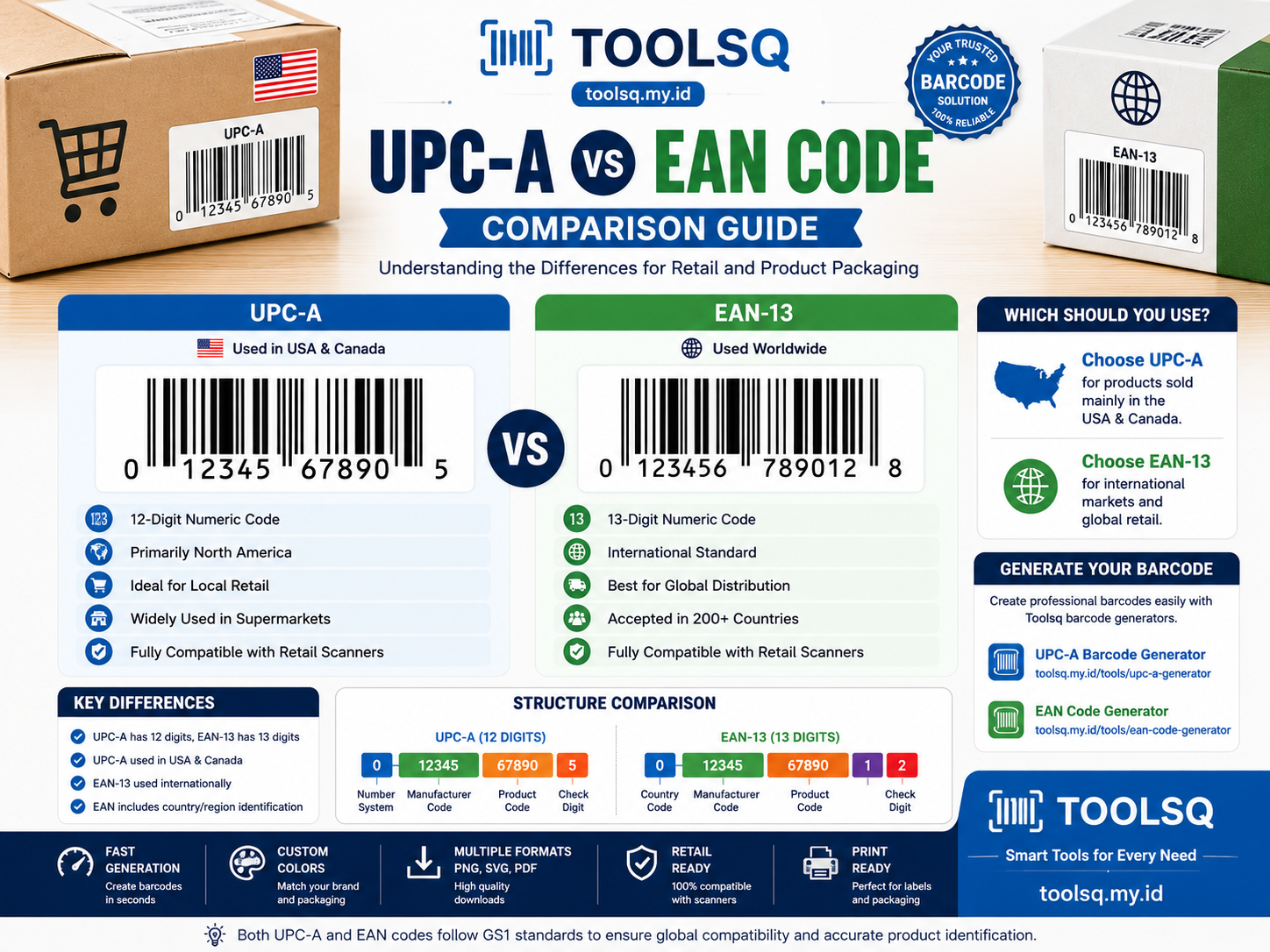
The biggest difference between UPC-A and EAN barcodes is the number of digits used in the code.
- UPC-A uses 12 digits
- EAN-13 uses 13 digits
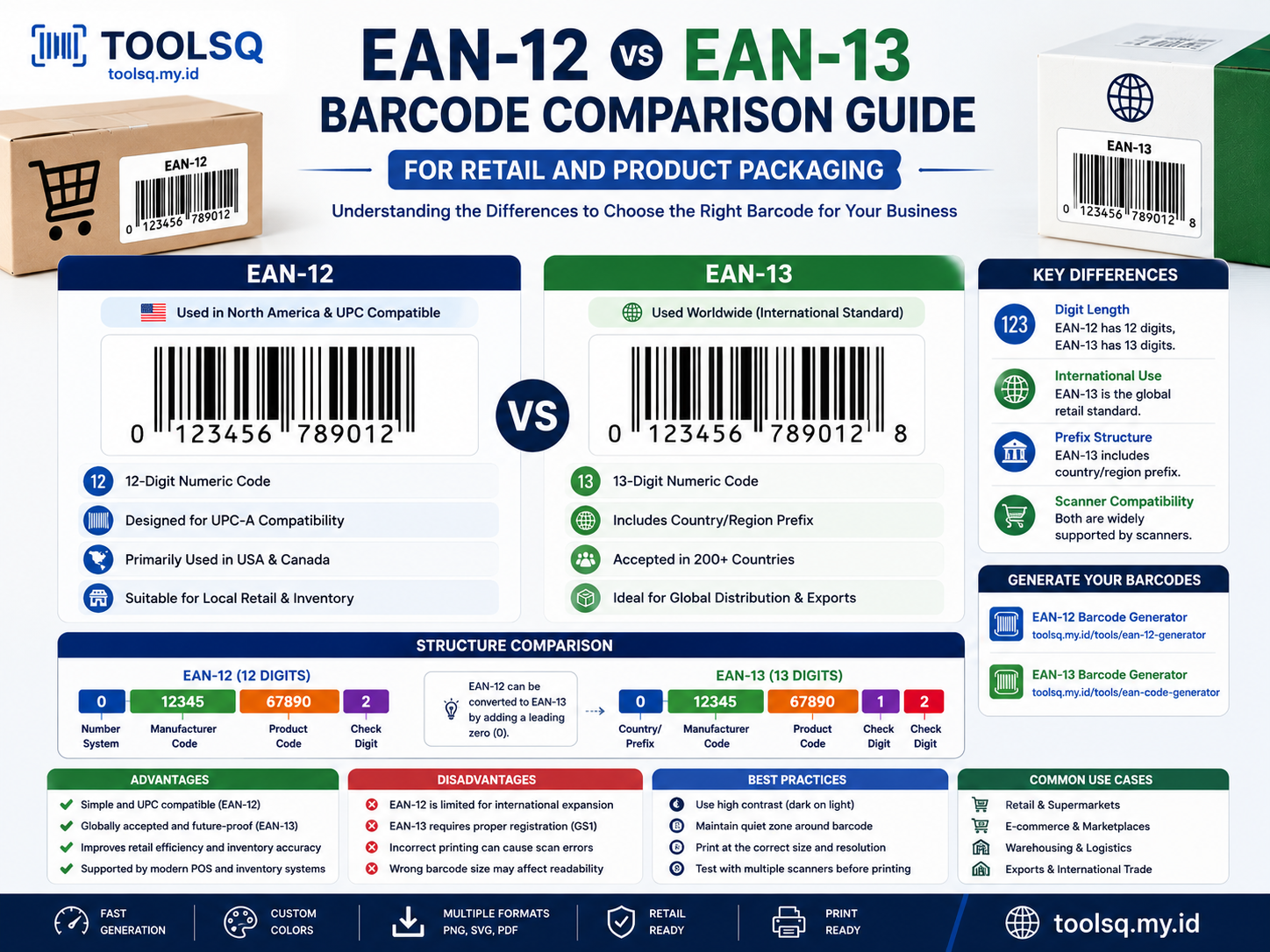
EAN includes an additional country or region identifier digit that helps support international product tracking and classification.
2. Regional Usage
UPC-A is primarily used in the United States and Canada, while EAN codes are widely used across Europe, Asia, Australia, and international markets.
- UPC-A = North America
- EAN = International markets
Businesses targeting global customers usually prefer EAN codes for broader compatibility.
3. Retail Compatibility
Both barcode systems work in modern retail scanners, but EAN codes are generally considered more internationally compatible.
- UPC-A compatible with EAN systems
- EAN widely accepted worldwide
- Retail scanner interoperability
4. Product Distribution Scope
UPC-A is ideal for local or North American retail products, while EAN codes are preferred for products sold globally through international retailers and marketplaces.
- UPC-A for local retail
- EAN for international commerce
5. Barcode Structure
UPC-A and EAN barcodes look visually similar, but EAN contains additional country identifier information that supports international retail systems.
- Manufacturer identification
- Product identification
- Error-checking digits
- Regional identification support
UPC-A vs EAN Comparison Table
| Feature | UPC-A | EAN-13 |
|---|---|---|
| Digits | 12 | 13 |
| Main Usage Region | USA & Canada | International |
| Retail Compatibility | Excellent | Global Standard |
| International Support | Limited | Excellent |
| Scanner Compatibility | High | High |
| Product Packaging | Retail Packaging | Global Distribution |
| Common Industries | Retail & Grocery | Global Retail |
Advantages of UPC-A Barcodes
UPC-A remains one of the most efficient barcode systems for North American retail businesses.
- Simple barcode structure
- Fast retail scanning
- Widely accepted in US retail
- Easy inventory management
- Strong POS compatibility
Businesses can create retail-ready labels using customizable UPC-A barcode generator for inventory systems and packaging designs.
Advantages of EAN Codes
EAN codes are considered the best solution for companies distributing products internationally.
- Global retail compatibility
- Supports international supply chains
- Recognized worldwide
- Ideal for exports and e-commerce
- Works with major international retailers
International businesses often rely on EAN-13 barcode generator for global products to simplify international packaging workflows.
Disadvantages of UPC-A and EAN Codes
UPC-A Limitations
- Primarily focused on North America
- Less ideal for international distribution
- Limited global identifier structure
EAN Limitations
- Slightly more complex numbering system
- May require international registration processes
- Additional management for global products
Customization Options for UPC-A and EAN Codes
Unlike QR Codes, UPC-A and EAN barcodes have limited customization capabilities because retail scanners require accurate barcode structures and spacing.
However, modern barcode generators still allow:
- Dark color customization
- Typography styling
- Packaging integration
- Professional label layouts
- SVG and PNG downloads
You can use barcode generator for UPC-A packaging and EAN barcode creator with customization tools to create visually professional retail labels.
Advantages and Disadvantages from User Perspective
Advantages
- Easy barcode generation process
- Retail-ready barcode formats
- Supports inventory automation
- Fast checkout system integration
- Compatible with packaging labels
- Works for warehouses and retail stores
Disadvantages
- Limited design customization
- Only supports numeric data
- Requires accurate barcode dimensions
- Improper styling may affect scanner readability
When Should You Use UPC-A?
UPC-A is ideal for businesses selling products mainly within North America.
- US supermarkets
- Canadian retail stores
- Local retail products
- Domestic inventory systems
When Should You Use EAN Codes?
EAN codes are better for businesses targeting international customers and global retail markets.
- International exports
- Global e-commerce
- International retail chains
- Worldwide product distribution
Best File Formats for Barcode Printing
PNG
Best for websites and product previews.
SVG
Ideal for scalable professional printing without losing quality.
Suitable for packaging production and bulk printing projects.
Common Barcode Mistakes
- Using low contrast colors
- Printing barcodes too small
- Distorting barcode dimensions
- Ignoring quiet zones
- Using blurry images
- Not testing barcode scanners
Security and Reliability Tips
- Use trusted barcode generators
- Verify barcode numbers carefully
- Use high-resolution printing
- Maintain proper barcode spacing
- Test scanners before production
FAQs
What is the difference between UPC-A and EAN?
UPC-A uses 12 digits and is mainly used in North America, while EAN uses 13 digits and is used internationally.
Can UPC-A work internationally?
Yes, many systems can still read UPC-A barcodes, but EAN is generally preferred for global distribution.
Which barcode is best for global retail?
EAN-13 is considered the international standard for global retail products.
Can I customize UPC-A and EAN barcodes?
Yes, limited customization such as colors and typography is possible while maintaining scanner compatibility.
Which barcode generator should I use?
You can use
ToolsQ UPC-A Generator
and
ToolsQ EAN Code Generator
for professional barcode generation and packaging workflows.
Conclusion
UPC-A and EAN barcodes are both essential barcode systems for modern retail, inventory management, logistics, and product packaging. While UPC-A is commonly used in North America, EAN codes provide stronger international compatibility for global businesses.
Choosing between UPC-A and EAN depends on your target market, retail distribution strategy, and international business goals. Companies focused on local retail may prefer UPC-A, while international sellers often benefit more from EAN barcode systems.
With the right barcode generator tools and proper packaging practices, businesses can create professional retail-ready barcodes suitable for supermarkets, warehouses, e-commerce platforms, and global product distribution.
Start generating professional retail barcodes today using UPC-A barcode generator for retail packaging and EAN barcode generator for international products to improve inventory management and retail compatibility.